Oct 18, 2026Technical Resources
How Does a Ball Lock Pin Work? Inside the Mechanism
A ball lock pin holds two parts together with nothing more than a few steel balls and a spring, yet it survives hundreds of thousands of insert-and-remove cycles on machinery that shakes all day.
How Does a Ball Lock Pin Work? Inside the Mechanism
A ball lock pin holds two parts together with nothing more than a few steel balls and a spring, yet it survives hundreds of thousands of insert-and-remove cycles on machinery that shakes all day. The trick is not in the balls themselves — it is in the geometry that pushes them outward and the button that pulls them back in.
Here is what is actually happening inside the pin.
The short answer
A spring pushes a central shaft forward. That shaft has a tapered section that forces two or more balls outward through holes in the pin body. The balls expand past the pin's outer diameter and sit behind the mating component's wall or in a groove, so the pin cannot slide out. Pressing the button pulls the shaft back, the balls retract into the body, and the pin slides free.
The four components
Almost every ball lock pin is built from the same four parts.
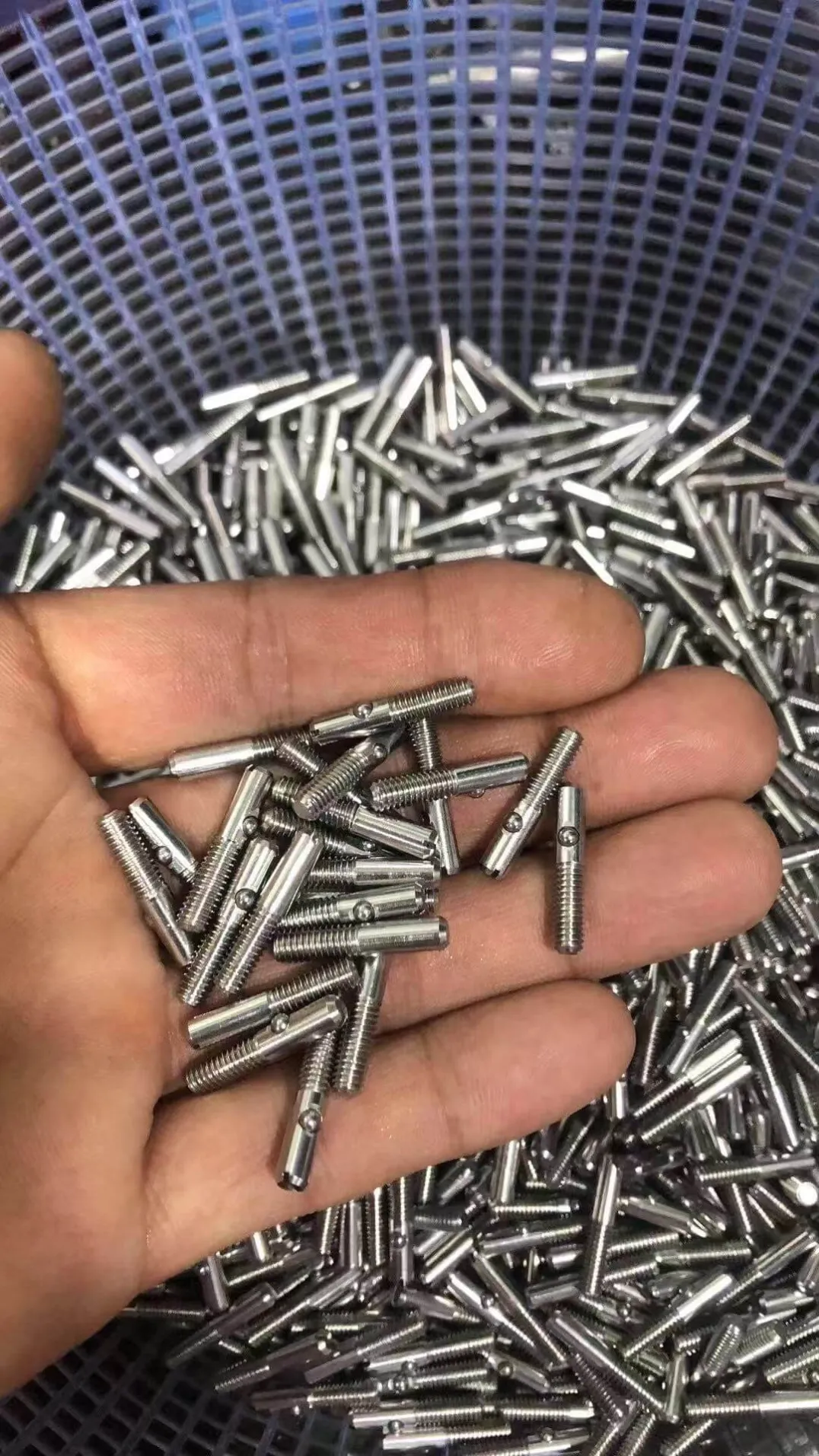
1. The pin body (shank)
A turned or ground cylinder, usually stainless or alloy steel. It carries the ball holes, drilled and deburred so the balls sit flush when retracted. The body takes the shear load, so its diameter and material do most of the work.
2. The balls
Typically two, sometimes four, hardened steel balls positioned 90 degrees apart or opposite each other. Their diameter is chosen so that when fully extended they protrude a controlled amount — enough to lock, not so much that they interfere with insertion.
3. The inner shaft
A sliding rod with a tapered or shouldered section. This is the part that translates button movement into radial ball movement. The angle of the taper determines how much button travel is needed to retract the balls, and how firmly they are wedged when extended.
4. The spring
A compression spring sitting behind the shaft. It provides the closing force. Its rate determines how much side load the balls can resist before they begin to retract on their own.
In some designs the button, shaft and handle are a single machined part; in others they are assembled and staked. Single-piece construction is more robust and more expensive.
What happens when you press the button
The sequence is short but every step matters:
- Your thumb pushes the button, compressing the spring.
- The shaft slides back. Its tapered section moves away from the ball holes.
- With nothing pushing them outward, the balls roll inward until they sit flush with or below the pin diameter.
- The pin now slides through the mating holes with only the body's diameter as an obstacle.
- Release the button. The spring drives the shaft forward. The taper wedges the balls back out.
- The balls cannot retract because the shaft is now blocking them, so the pin is locked.
That last point is the heart of the design: the balls are held in place mechanically, not by spring force alone. The spring only has to hold the shaft forward. Insertion load and shear load are carried by the taper and the pin body.
Single acting versus double acting
Single acting pins are the common type. The balls are spring-loaded outward and you press the button to insert or remove. When the pin is in place, the spring alone keeps the shaft forward.
Double acting pins require a deliberate action to both insert and release, typically a push on the button to seat and a pull to release, or a positive detent at both ends of travel. They are chosen where vibration could otherwise let a single-acting pin walk out, or where an accidental button press would be dangerous.
If your application involves sustained vibration, high cycle counts, or a safety-critical joint, ask specifically whether a double acting version is available for your size.
Why the balls hold: mechanics of retention
Two separate mechanisms are at work.
Axial retention. The balls sit behind a shoulder, a wall, or in a groove. To pull the pin out, the mating part would have to shear the balls or deform the shoulder. This is what stops the pin from sliding out along its axis.
Radial loading. Side load on the pin is carried by the pin body in shear, not by the balls. The balls' job is to keep the pin located. This distinction matters when you read a load rating: the rating usually refers to the double-shear strength of the shank, provided the mating holes are properly supported.
A pin will fail in one of three ways: the shank shears, the mating hole deforms, or the balls retract because of spring fatigue or a worn taper. The first two are design questions. The third is a maintenance question.
What actually wears out
- Spring fatigue — the most common failure. The pin becomes easy to insert and starts backing out.
- Taper wear — repeated cycling polishes the taper, reducing ball protrusion.
- Ball hole wear — debris or misalignment enlarges the holes and the balls seat loosely.
- Corrosion — in washdown or marine environments, corrosion in the ball holes is what kills the pin, not the shank.
In a well-specified pin, thousands of cycles are normal. If you are replacing pins monthly, the pin is probably the wrong specification, not a bad batch.
Choosing the right pin for your application
Work through these in order:
- Mating hole diameter and material thickness — determines shank diameter and grip length.
- Shear load in service — determines material and whether one or two shear planes apply.
- Environment — stainless grade and surface treatment.
- Cycle count and vibration — single or double acting, spring specification.
- Operator access — button, T-handle, ring handle or lanyard.
Get these five right and the pin will outlast the machine. Guess at them and you will be re-ordering within months.
Frequently asked questions
Do ball lock pins need lubrication? A light dry-film lubricant on the balls and taper helps, particularly in dusty environments. Avoid heavy grease, which collects abrasive grit.
Can a ball lock pin be used as a load-bearing pivot? Only with care. The pin body can carry shear, but the ball holes are stress concentrations. For continuous pivoting motion, use a clevis pin or a bush instead.
Why does my pin feel loose after a few months? Almost always spring fatigue or taper wear. Check ball protrusion with a dial indicator; if it has dropped noticeably, replace the pin.
Are ball lock pins available in metric and imperial? Yes. Metric sizes from 4 mm to 20 mm and imperial sizes from 3/16 inch to 1 inch are both widely produced. Specify which system your drawing uses to avoid a costly mismatch.
Next step
If you know your hole diameter, material thickness and expected load, a manufacturer can recommend the correct pin size and material in a single reply. Send those three numbers along with your application and environment.